Theological Terms and Resources

Below are brief descriptions of significant terms and resources you may encounter as you do research at the Allison Library. For a more extensive treatment of these and other terms, consult resources such as:

pocketdict
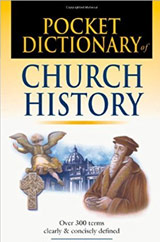
Pocket Dictionary of Church History
Essential Theological Terms
bakercompactdict
9 results found

Canon

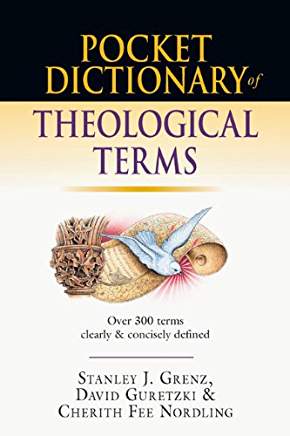
Literally meaning “standard” or “rule,” the term is most closely associated with the collection of books that the church has recognized as the written Word of God (Scripture) and that functions as the rule or standard of faith and practice in the church. Although the various Christian traditions are not in full agreement as to which books should comprise the collection of Scripture, at the very least all agree that the sixty-six books of the Protestant Bible are canonical and therefore authoritative (Stanley J. Grenz, David Guretzki, and Cherith Fee Nordling. Pocket Dictionary of Theological Terms).
Circumincession

Circumincession is a theological concept, also referred to as perichoresis, that affirms that the divine essence is shared by each of the three persons of the Trinity in a manner that avoids blurring the distinctions among them. By extension, this idea suggests that any essential characteristic that belongs to one of the three is shared by the others (Stanley J. Grenz, David Guretzki, and Cherith Fee Nordling. Pocket Dictionary of Theological Terms).
Commentaries

A commentary is a work that provides a series of explanations or interpretations and supporting arguments on a particular text, often with an accompanying translation if the text is in a foreign language. Commentaries range from technical exegetical treatments to popular applications of texts. Biblical commentaries can often be classified as technical, background, homiletical, or pastoral.

Technical commentary: A technical commentary usually presents a verse by verse explanation of a biblical text based on the original languages, academic research, and historical background.

Daniel : a commentary on the book of Daniel

Bible background commentary: A background commentary presents historical background believed to be pertinent for interpreting specific Biblical texts, usually in a verse-by-verse format.

The Gospel of Luke : a commentary on the Greek text

Homiletical commentary: Homiletical commentaries often present sermon’s or applications on segments of a biblical text in order to aid a preacher in the preparation of his or her sermon.

St Andrews Expositional Commentary


Pastoral Commentary: Pastoral commentaries are non-technical treatments of a text, usually based on an accessible translation, that focus on the application of a text to a believer’s life.

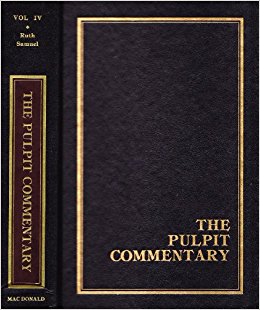
The Pulpit Commentary

Concordance

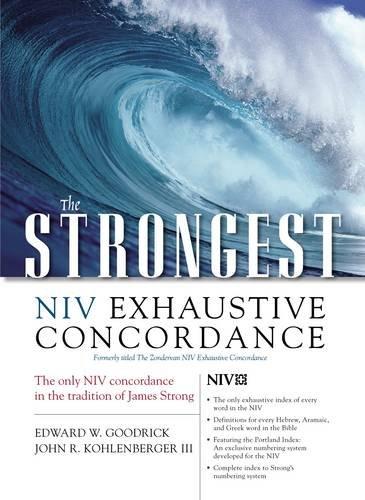
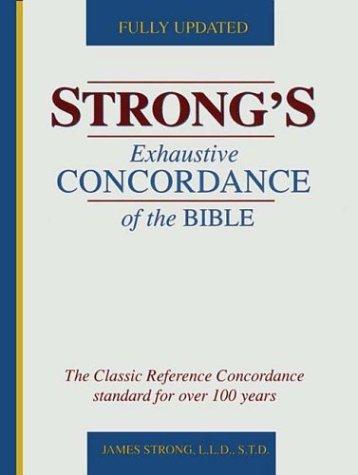
A Bible concordance presents a list of every occurrence of a word in the Scriptures, often with a segment of the immediate context. Concordances are tailored to specific translations or the original languages.

Examples:

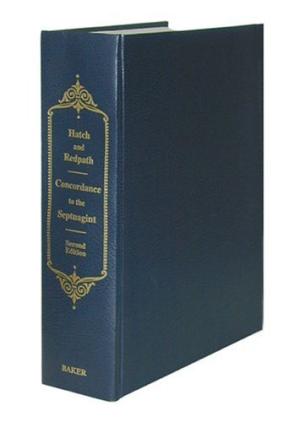
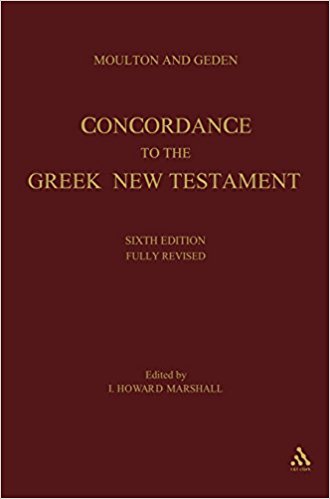
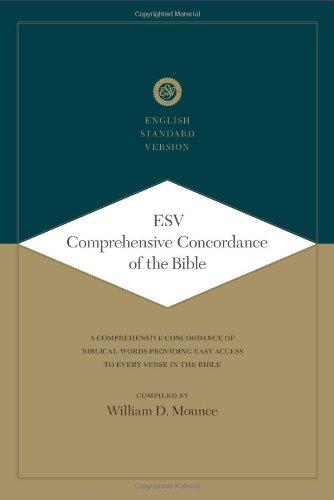
Hatch and Redpath Concordance of the Septuagint         New Concordance of the Torah         Concordance to the Greek New Testament         ESV Comprehensive Concordance of the Bible         The Strongest NIV Exhaustive Concordance         The Exhaustive Concordance of the Bible

Cosmology

Cosmology is derived from the Greek word kosmos (world) and refers to the attempt to understand the origin, nature and subsequent history of the universe. Cosmology is an area where theology and science intersect, insofar as both are interested in understanding whether or not there is a first cause to the universe and whether or not there is purposeful direction and design in the universe (Stanley J. Grenz, David Guretzki, and Cherith Fee Nordling. Pocket Dictionary of Theological Terms).

Database

A database is a structured electronic system for indexing and storing information from journal articles. Databases are sometimes called indexes.

Deism

Deism is a belief that understands God as distant, in that God created the universe but then left it to run its course on its own, following certain “laws of nature” that God had built into the universe (Stanley J. Grenz, David Guretzki, and Cherith Fee Nordling. Pocket Dictionary of Theological Terms).
Dictionary or Encyclopedia of a Subject

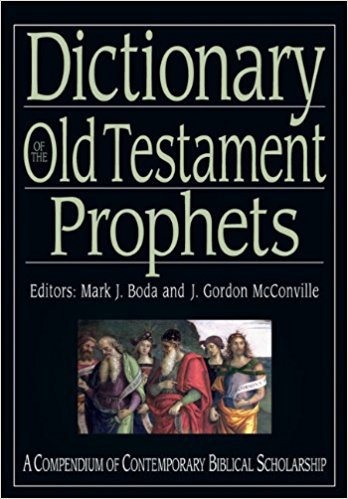
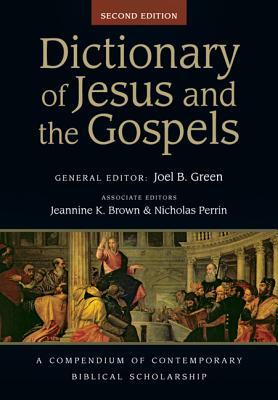
A dictionary or encyclopedia  of a subject (E.g., Dictionary of the Gospels) present short articles, alphabetically arranged, on key data concerning the subject (such as key figures, words, movements, etc.) along with a bibliography. As a tertiary source, dictionary or encyclopedia articles are good for giving a general overview of a particular research subject and pointing the researcher to key primary and secondary sources for further research.A dictionary or encyclopedia  of a subject (E.g., Dictionary of the Gospels) present short articles, alphabetically arranged, on key data concerning the subject (such as key figures, words, movements, etc.) along with a bibliography. As a tertiary source, dictionary or encyclopedia articles are good for giving a general overview of a particular research subject and pointing the researcher to key primary and secondary sources for further research.

Examples:

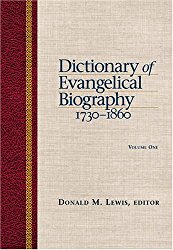
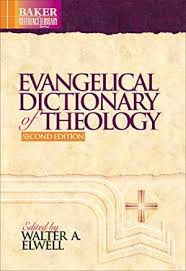
Dictionary of the Old Testament Prophets        Dictionary of Jesus and the Gospels        Dictionary of Evangelical Biography: 1730-1860        Evangelical Dictionary of Theology

Docetism

Docetism was a teaching in the early church that Jesus was fully God but only appeared to be human (taken from the Greek “to seem or appear”). Docetist theologians emphasized the qualitative difference between God and humans and therefore downplayed the human elements of Jesus’ life in favor of those that pointed to his deity. The early church rejected docetism as an heretical interpretation of the biblical teaching about Jesus (Stanley J. Grenz, David Guretzki, and Cherith Fee Nordling. Pocket Dictionary of Theological Terms).